Delving into the realm of why 18-Wheeler Accident Settlements surpass those of Standard Car Claims, this initial segment beckons readers with an intriguing glimpse into the complexities that drive these settlement differences.
Exploring the disparity in size and weight, severity of injuries, and the role of insurance coverage, this discussion sheds light on the factors that elevate 18-Wheeler Accident Settlements.
Factors contributing to higher 18-wheeler accident settlements.
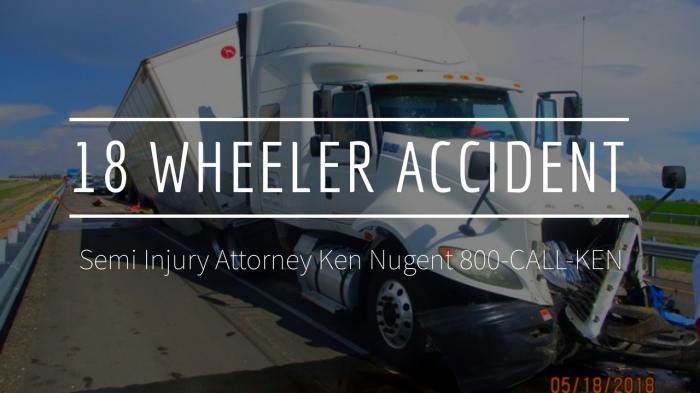
When it comes to 18-wheeler accident settlements, there are several factors that contribute to the higher amounts awarded to victims. These factors are often influenced by the size and weight disparity between an 18-wheeler and a standard car, the severity of injuries sustained in such accidents, and the role of insurance coverage for commercial vehicles.
Impact of size and weight disparity
The sheer size and weight of an 18-wheeler truck compared to a standard car can have a significant impact on the settlement amounts in accident cases. Due to the massive size and weight of these commercial vehicles, accidents involving 18-wheelers tend to result in more severe damages and injuries.
This often leads to higher settlement values to compensate victims for their losses.
Severity of injuries in 18-wheeler accidents
The severity of injuries sustained in 18-wheeler accidents is another crucial factor that influences settlement negotiations. Given the size and weight of these trucks, accidents with 18-wheelers can result in catastrophic injuries or even fatalities. As a result, the damages awarded in these cases are typically higher to cover medical expenses, lost wages, pain and suffering, and other related costs.
Role of insurance coverage for commercial vehicles
Insurance coverage for commercial vehicles, including 18-wheelers, also plays a significant role in determining settlement values. Commercial trucks are required to carry higher insurance limits compared to standard cars due to the increased risks they pose on the road. This higher coverage means that there is more compensation available to victims in case of an accident, leading to higher settlement amounts in 18-wheeler accident cases.
Legal complexities in 18-wheeler accident claims
When it comes to 18-wheeler accident claims, there are various legal complexities that can impact the settlement outcomes. Understanding the specific regulations, liability issues, and involvement of multiple parties is crucial in navigating these complex cases effectively.
Regulations specific to commercial trucks
- Commercial trucks are subject to federal regulations set by the Federal Motor Carrier Safety Administration (FMCSA) to ensure safety on the roads.
- These regulations cover areas such as driver qualifications, hours of service, vehicle maintenance, and cargo securement.
- Non-compliance with these regulations can significantly impact liability and settlement amounts in 18-wheeler accident claims.
Liability issues in 18-wheeler accidents
- Unlike standard car accidents, 18-wheeler accidents often involve multiple potentially liable parties, including the truck driver, trucking company, vehicle manufacturer, and even cargo loaders.
- Determining liability in these cases can be complex, as it may involve investigating factors such as driver negligence, equipment failure, or company policies.
- The presence of multiple parties can complicate the claims process and lead to higher settlement amounts to account for shared responsibility.
Involvement of multiple parties
- With multiple parties involved in 18-wheeler accidents, negotiations for settlements can become more challenging and lengthy.
- Each party may try to shift blame onto others, leading to disputes over liability and compensation.
- The presence of insurers representing different parties can also complicate the settlement process and potentially result in higher settlement amounts to resolve the claims.
Investigation process for 18-wheeler accidents.
When it comes to investigating 18-wheeler accidents, thoroughness is key to building a strong case. Gathering evidence and determining fault requires a detailed process that involves multiple steps and experts.
Steps involved in gathering evidence for an 18-wheeler accident claim.
- Secure the accident scene: The first step is to secure and document the accident scene to preserve crucial evidence.
- Collect witness statements: Gathering statements from witnesses can provide valuable insights into what happened leading up to the accident.
- Obtain police reports: Police reports can offer official documentation of the accident and help determine who was at fault.
- Examine the vehicles: Inspecting the vehicles involved can help identify any mechanical failures or issues that may have contributed to the accident.
Accident reconstruction experts in determining fault and liability.
Accident reconstruction experts play a crucial role in piecing together the events leading to the accident. By analyzing factors such as skid marks, vehicle damage, and road conditions, these experts can provide valuable insights into how the accident occurred and who may be at fault.
Importance of black box data and trucking logs in settlement negotiations.
- Black box data: The black box, also known as an event data recorder, can provide critical information such as vehicle speed, braking patterns, and engine performance leading up to the accident.
- Trucking logs: Trucking logs detail a driver’s hours of service, rest breaks, and maintenance records. These logs can help determine if the driver and the trucking company were in compliance with regulations at the time of the accident.
Role of legal representation in maximizing 18-wheeler accident settlements.
Legal representation plays a crucial role in maximizing 18-wheeler accident settlements. Hiring a lawyer experienced in handling such cases can significantly impact the outcome for victims. These professionals have the knowledge, skills, and resources to navigate the complexities of 18-wheeler accident claims and ensure that clients receive the compensation they deserve.
Significance of hiring an experienced lawyer
- Expertise in 18-wheeler accident laws and regulations
- Negotiation skills to secure higher settlements
- Ability to gather evidence and build a strong case
- Understanding of insurance company tactics and strategies
Strategies used by legal professionals
- Thorough investigation to determine liability
- Consulting with accident reconstruction experts
- Negotiating with insurance companies on behalf of clients
- Filing lawsuits and representing clients in court if necessary
How legal advocacy helps victims
Legal advocacy can help victims navigate the complex legal procedures involved in 18-wheeler accident claims. Lawyers can ensure that all deadlines are met, paperwork is filed correctly, and the rights of the victims are protected throughout the process. Additionally, legal representation can help maximize compensation by presenting a compelling case that highlights the full extent of the damages suffered by the victims.
Last Point
As we draw to a close, the intricate web of factors contributing to the higher settlements in 18-Wheeler Accidents comes into focus. From legal complexities to investigation processes and the pivotal role of legal representation, the stage is set for a comprehensive understanding of why these settlements stand distinct from standard car claims.
Essential Questionnaire
How does the involvement of multiple parties impact 18-Wheeler Accident settlements?
Having multiple parties involved can complicate negotiations and increase the settlement amounts due to shared liability among different entities.
What role does accident reconstruction play in determining fault in 18-Wheeler Accident settlements?
Accident reconstruction experts analyze evidence to establish fault, which is crucial in determining settlement amounts.
Why is hiring a lawyer experienced in 18-Wheeler Accident cases significant?
Experienced lawyers understand the nuances of these cases, navigate legal complexities effectively, and can negotiate higher settlements on behalf of their clients.